The Protected Schools Act: A Bad Sign For Society
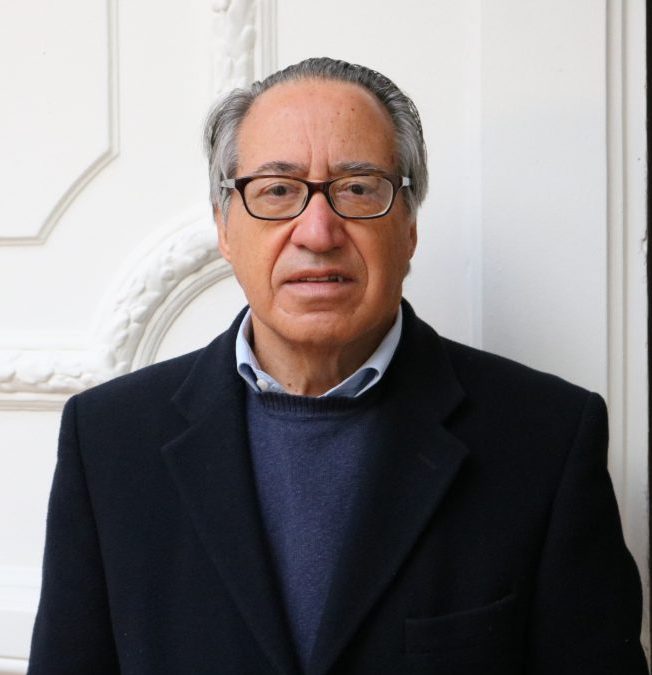
Interview with Carlos Eugenio Beca, expert in education with a focus in educational politics, with whom we explore the challenges currently facing the teaching of children’s and adolescents’ rights in Chile.
As a professor of philosophy at Universidad Catolica de Chile (UC), Beca is an academic and served for 10 years as the director of the Center of Professional Development, Experimentation and Educational Research. (CPEIP, 2000-2010). He served on the technical secretariat of UNESCO’s Regional Strategy for Teachers (2011-2019), and is the author of various publications about educational politics and continual professional development of teachers.
Why is it important to educate kids on the topic of children’s rights?
The mission of schools is to educate children, and therefore take care of them and protect their rights, to teach them and help them reach the understandings necessary for their development in their personal lives, in their life in community, and that means taking great care to protect their rights as children and teenagers.
“Schools have this mission by nature, but they clearly face difficulties in addressing it. We must also distinguish between one school and another, because schools have their own educational programs and leadership styles, which may sometimes be more or less conducive to respecting children’s rights. There are a number of social factors and certain beliefs about education that have been taking root in Chile for many decades, which mean that not all schools have the same capacity or commitment to safeguarding the rights of children and adolescents. There is the material or economic barrier, because positioning oneself as a school with strong academic results yields financial benefits, brings prestige, and attracts more students. Everything is heavily focused on these results and on attracting more students, and since educational funding is allocated per student, this directly impacts a school’s opportunities. And while this issue has been addressed today through the unified admissions process, there is now a push to return to student selection. In any case, schools compete and, to some extent, discriminate between children who perform better and those who do not.”
Violence in school: prevention or repression
A fundamental factor to take into account to strengthen a culture of rights within educational establishments is the social context in which it is embedded: “The context of violence in society has an impact on schools, all of the dramatic conflicts of life, such as those seen this year in Calama, make it so that many times schools have to worry themselves with maintaining order, which can result in harsh rules being placed on the children that do not fully protect their rights. There is a tension that exists between schools and trying to maintain order, but doing so tends to result in punitive or controlling measures. This is what’s happening today with the project of the Protected Schools Act, which tends to infringe upon children’s rights in an effort to ensure better coexistence. But how do we maintain coexistence: with rules? Punishments? Restricting rights or preventing potential problems before they arise? Because while a tragic event like what happened in Calama can happen inside of a school, if preventative measures aren’t taken, it might happen right outside the school, which is just as terrible.”
“All of those security checks before entering–such as security gates and backpack inspections–not only infringe on rights, but also aren’t likely to be solutions. They generate environments of fear, and for this reason this law can be considered as an element that undermines the rights of children’s rights in school. It may result in a setback because the creation of these environments of control and distrust toward children may cause them to react to that mistrust with more violence. So that might not help.”
The so-called “Protected Schools Act” (Ley Escuelas Protegidas), enacted on August 12, authorizes schools to search students’ backpacks and personal belongings, bans items that conceal students’ faces, and generally gives teachers greater authority to adopt order and discipline measures. To that end, schools must incorporate these procedures into their internal regulations.
Following a petition filed with the Constitutional Court, the legislature removed four of the most controversial provisions from the regulation, including the one that provided for the intervention of the PDI or the Carabineros in the event that a student refused to allow their belongings to be searched, and the one that restricted access to tuition-free college education for students who had been disciplined for conduct that disrupted the school community.
Professor Beca is critical of the law’s effects and the message it sends to society: “It includes a number of voluntary elements, because it doesn’t mandate that schools have security gates—it simply makes it possible. Moreover, this measure entails a series of costs that schools cannot afford; it isn’t very feasible either. But it does require the inspection of backpacks, which is probably one of the most contentious measures, because that act creates friction between students and a figure of authority—and that’s a context ripe for provoking, I don’t know about confrontations, but certainly a strained relationship, because nobody likes having their belongings searched. So if the law isn’t mandatory, at its core it’s really more of a signal to society—it’s more about that than its practical effect.”
A key factor in the educational ecosystem are the professors that face their own challenges when it comes to addressing complex issues such as fostering a culture of rights among their students. How are teachers coping with this challenge? Carlos Eugenio Beca: “It’s very difficult to generalize, but sometimes there is a differentiation that can generally be made because younger teachers have the initial training, which today is taught in universities, framed by educational policies that promote inclusion. There has been a series of methods oriented to better the initial training of teachers. There are new standards, we have obligatory accreditation in education programs, and there is a framework in place for effective teaching. All of these tools have tended to emphasize the theme of socio-emotional wellbeing of students, and to generate favorable conditions for learning, creating a suitable climate. So it’s possible that, in the initial training for teachers, and this is a hypothesis, the newer generations of teachers have more tools than the teachers of the past. We’re talking of a change at least 5 or 10 years ago.”
“In addition to this, the younger teachers have better opportunities to better understand the culture of children today, which is very distinct and changes every day with the advent of technology, the digital era, and social media. Teachers who were trained a long time ago, when pedagogical education tended to be a little more authoritarian, in which they were taught a more unilateral and one directional form of discipline. I think that today there is a tendency geared toward that kind of listening and toward the respect and consideration for the words of kids. But at the same time, there are newer teachers who also experience difficulty adapting to this new culture. The kids are changing quickly, and so is society because of the digital era, artificial intelligence, and social media.”
In this context, continuing education takes on paramount importance. “Even though other professionals have been brought in, such as psychologists, speech-language pathologists, and the PIE teams,” says Professor Beca, “it’s more common to hear teachers say, ‘We lack the tools to address diversity, and we’d like to have more.’ They see a contradiction between being required to deliver better academic results on the one hand, and on the other, having to serve students with diverse abilities and needs who may not help raise average test scores.”
The other decisive factor in a child’s upbringing is the family. What role should a family play, and to what extent does it contribute to the promotion of the rights of children and teenagers?
School admits children into pre-kindergarten at age 4—or sometimes a little earlier—and by that point, the child already exhibits certain characteristics, among which the respect shown for their rights during childhood within the family plays a significant role. And there’s a huge variety of situations. The school has no control over what may have happened to that child before—whether they arrive having had their rights violated or having had their rights respected—which are very different situations. Schools must build a relationship with the family, which is a huge challenge. And it’s incredible that the pandemic, with all its difficulties, actually helped strengthen those ties because schools found themselves needing to reach out to families to find out what was happening with the children—why they were or weren’t connecting to virtual classes, and so on. Today, we’re also seeing a trend where families are getting involved to improve retention rates. There has been a strong emphasis on the issue of low attendance.
“Schools have traditionally had great difficulty building relationships with families. There are parent-teacher associations and parent meetings, but it is very important to further develop that bond and explore how schools can work with parents to align their approaches in order to foster a collaborative educational environment. There is also a tradition of schools offering programs for parents. Schools can play an educational role in working with parents. Now, the relationship with parents has also been crossed by the violence that is present in society. It’s not uncommon to see parents lashing out at teachers, administrators, and school inspectors. In those cases, the protection of their children’s rights is seen as a protection that is exercised in a violent manner. “I’m going to complain about their grades, I’m going to complain because they were scolded or reprimanded.” There’s a tension there. But it is one thing to create mechanisms so that parents have a place to file a complaint if they feel their children’s rights are being violated, and quite another to resort to violence against the school, the teaching staff, and the administrators. In that case, a misguided form of protection is at play, causing the school to adopt a defensive stance and view parents as a threat, which makes it difficult to collaborate. “I believe schools face an enormous challenge in improving their relationship with parents, because, in fact, parents are necessarily allies. But the situation varies among families and schools; each child must be treated differently based on their family situation, and that’s complicated because we know that schools tend to standardize rather than diversify.”
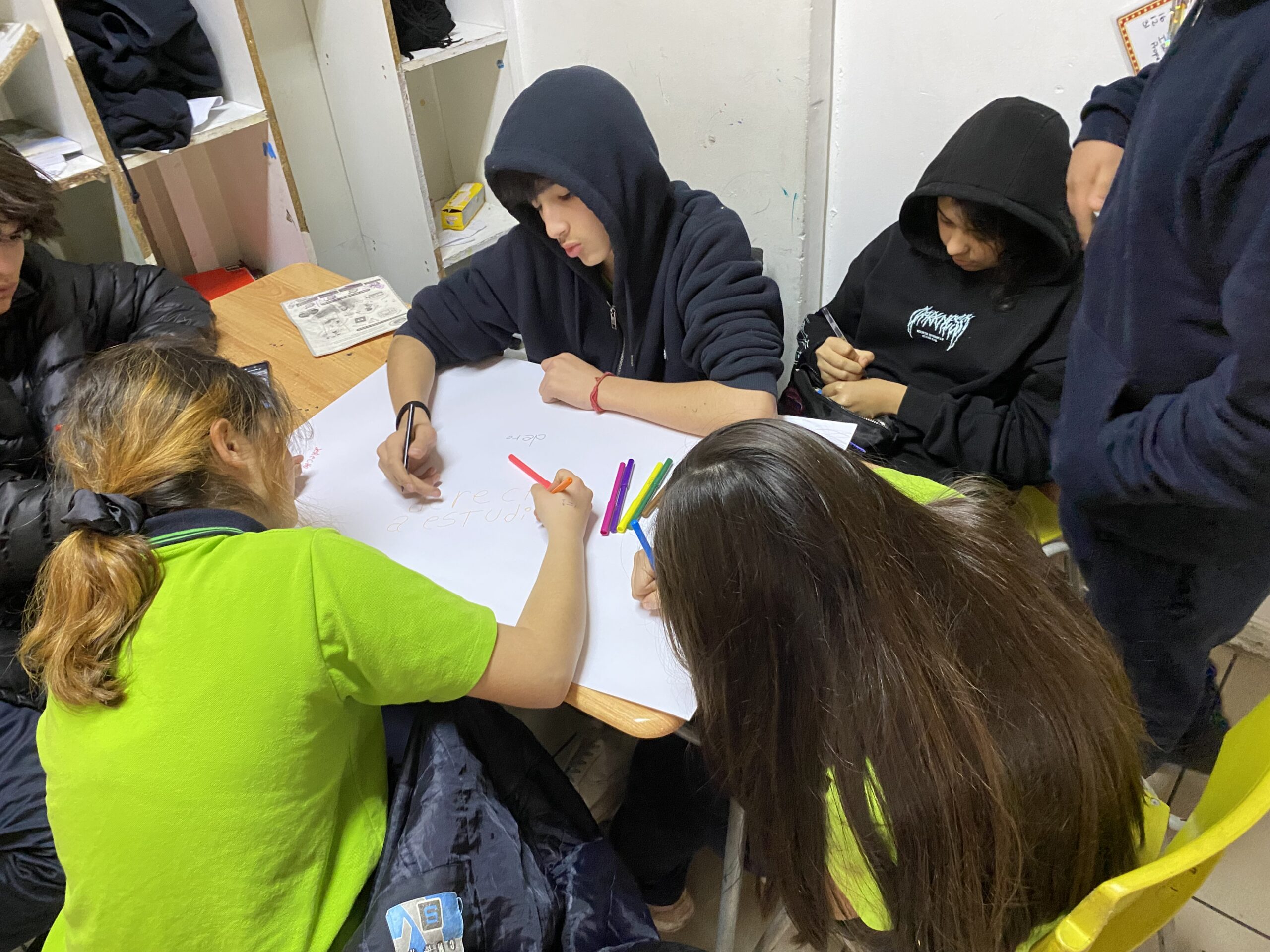 How can we respond to those who argue that the exercise of fundamental rights in childhood must be balanced with the imposition of certain duties?
I think that we should view this not as a counterbalance, but instead that the education systems has to address both dimensions of rights and responsibilities. Students have a duty to learn, study, fulfill any academic obligations that they may have, but they also have a responsibility to respect the rights of others, because understanding rights only as “my rights” leads to more individualism and ego.
The first responsibility is being able to understand that my rights aren’t the only ones that exist. Each of my classmates has rights too, and so do the adults around me, such as teachers, principals, and inspectors, who need to be treated with respect. Understanding these rights as rights that aren’t individual, but as rights that belong to everyone, means education based in solidarity, respect, and in caring for others and looking after them, because we all have the right to care for ourselves and be cared for. When we understand rights not as a purely individual matter but as something that affects all of us who belong to the educational community, children, teenagers, and adults alike, it necessarily follows that a right also entails a duty: I have a duty to respect other people’s rights. That’s where you can better see how rights and duties are counterparts of each other, and how they are part of the same thing.
From a broad perspective on the current landscape of rights-based education in the school context, and in terms of its integration into the school curriculum, how can the teaching of human rights be strengthened?
The most recent changes to the curriculum have incorporated more of the dimension of civic education, there is even a law from 10 years ago that requires schools to have implemented civic education into their curriculum, and this includes the topic of human rights. Schools have to educate students on what children’s rights are, but also about human rights in society: social rights, the right to life. This is a very sensitive issue given our entire historical experience with human rights, and it must be carefully considered so that it is understood that society must have certain standards that respect people’s rights—including the rights of those who violate the rights of others and commit criminal acts, but who are also people with rights of their own.
“Now, we are a society living with a higher presence of crime, of organized crimes and the response to this tends to be extremely punitive. That’s how it’s so easy – and social media contributes to this–for climates of violence to be created in which rights are only for some, not for all. In this sentiment schools have to be capable, according to the distinct ages of their students, to incorporate a perspective that prepares them to be members of a society that respects the rights of all people.”
“There is still work to be done in the area of professional development, both in initial training and continuing education. These tend to be deeply rooted in social science teachers, but it’s important that they are not the only ones engaging in these reflections, but that they are cross-disciplinary and incorporated into all academic fields. I think that homeroom teachers have an important role in this because they are the ones who have more interaction with the students. In this regard, it’s important to start at the micro level—what happens when classmates interact in the classroom—and move toward the broader context of the school, conflicts between different classes, and eventually what happens in society as a whole, and then reflect on it. It’s an interesting challenge—and a complicated one, too.”
Paulina Vera Puz