Editorial Chi Werkún 43
 At the PIDEE Foundation, we advocate for the need to incorporate human rights education
starting in middle school. Human rights are often considered a topic reserved for adults, political debates, and/or the courts. However, values such as respect, justice, dignity, empathy, and non-discrimination are not learned spontaneously; they must be cultivated daily within the family, at school, and in the community.
The school, as an educational institution, is in and of itself a guarantor of the defense, respect, and promotion of human rights; children should experience this on a daily basis in their classrooms, during recess, through collaborative work, and in the way school conflicts are addressed.
Today, human rights education remains an unaddressed issue in our country’s schools. The Chilean educational system, characterized by constant measurement of results, has sidelined this learning, which is fundamental to community life and the strengthening of democracy. Civic education is not limited to learning to accept and obey rules; its fundamental principle is the ethical recognition of others as equals in rights and dignity.
In Chile, educational institutions have citizenship education and school coexistence plans that generally consist of behavioral regulations and internal protocols; these were developed without the participation of all school stakeholders, such as students, families, and the school community. These regulations do not foster the necessary reflection among students and their families regarding respectful treatment, solidarity, justice, diversity, and cultural differences.
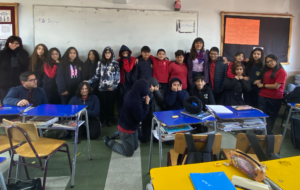 Teaching children about human rights does not mean having them memorize international treaties; it means providing them with the tools to identify violations of their rights, to recognize injustice, manipulation, and cultural and gender differences in their classroom and school, and to understand our country’s history. A child who knows his or her rights is better able to protect himself or herself and to understand his or her responsibility within society; little by little, he or she becomes an autonomous and self-regulated individual, capable of engaging actively and cooperatively with others. The guiding principle of our educational system is a well-rounded education, which involves nurturing inquisitive, thoughtful, and well-balanced individuals who are capable of communicating their ideas; who are principled, bold, and proactive; and who are reflective, open-minded, respectful, and supportive, as well as hardworking and persevering in their efforts.
Restoring human rights education to the center of the Chilean educational system is an ethical imperative—especially in light of the recently enacted “Protected Schools” law, which fails to take into account the best interests of the child, the child’s dignity, and respect for the child’s opinion, instead framing public safety in terms of social control. If we aspire to build a less fragmented, more compassionate, and genuinely democratic society, we must restore to the classroom the explicit teaching of human dignity as the foundation upon which all knowledge is built.